
欢迎联系我们!




产品展厅

|
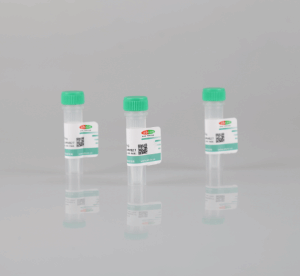
CCL21a蛋白, 6Ckine蛋白
- 品牌:爱必信(absin)
- 产地:中国
- 型号:10ug,50ug,500ug,1mg
- 货号:abs04167
- 价格: ¥838/支
- 发布日期: 2022-04-07
- 更新日期: 2026-03-31
产品详请
| 产地 | 中国 |
| 品牌 | 爱必信(absin) |
| 货号 | abs04167 |
| 用途 | - |
| 包装规格 | 10ug,50ug,500ug,1mg |
| 纯度 | Greater than 95% as determined by reducing SDS-PAGE.% |
| CAS编号 | |
| 是否进口 | 否 |
| 描述 |
Recombinant Mouse C-C Motif Chemokine 21a is produced by our E.coli expression system and the target gene encoding Ser24-Gly133 is expressed.
|
| 别名 |
CCL21a蛋白, 蛋白, 6Ckine蛋白;C-C Motif Chemokine 21a, 6Ckine, Beta-Chemokine Exodus-2, Small-Inducible Cytokine A21a, Thymus-Derived Chemotactic Agent 4, TCA4, Ccl21a, Scya21, Scya21a
|
| 来源 |
Escherichia coli.
|
| 形态 |
Lyophilized from a 0.2 μm filtered solution of 20mM PB,150mM NaCl,pH7.4.
|
| 序列 |
SDGGGQDCCLKYSQKKIPYSIVRGYRKQEPSLGCPIPAILFSPRKHSKPELCANPEEGWVQNLMR RLDQPPAPGKQSPGCRKNRGTSKSGKKGKGSKGCKRTEQTQPSRG
|
| 纯度 |
Greater than 95% as determined by reducing SDS-PAGE.
|
| 内毒素水平 |
Less than 0.1 ng/μg (1 IEU/μg) as determined by LAL test.
|
| 溶解方法 |
Always centrifuge tubes before opening. Do not mix by vortex or pipetting. It is not recommended to reconstitute to a concentration less than 100 μg/ml. Dissolve the lyophilized protein in ddH2O. Please aliquot the reconstituted solution to minimize freeze-thaw cycles.
|
| 储存/保存方法 |
Lyophilized protein should be stored at < -20°C, though stable at room temperature for 3 weeks. Reconstituted protein solution can be stored at 4-7°C for 2-7 days. Aliquots of reconstituted samples are stable at < -20°C for 3 months.
|
| 背景说明 |
C-C Motif Chemokine 21a (CCL21a) is a small secreted cytokine that belongs to the intercrine beta (CC chemokine) family. Mouse CCL21 cDNA encodes a 133 amino acid residue protein with a 23 residue signal peptide that is cleaved to generate the 110 residue mature protein. Mouse CCL21 has three forms while CCL21a has Ser-65. CCL21 elicits its effects by binding to a cell surface chemokine receptor known as CCR7 and CXCR3. Mouse CCL21 inhibits hemopoiesis and stimulates chemotaxis. It has chemotactic function in vitro for thymocytes and activated T-cells, but not for B-cells, macrophages, or neutrophils. Mouse CCL21 shows preferential activity towards naive T-cells and may play a role in mediating homing of lymphocytes to secondary lymphoid organs.
|
| Accession |
P84444
|



联系方式
- 手机:13761418683